Venue
The City
Rzeszów, the capital of the Subcarpathian Province, is the leading industrial, academic, cultural, and recreational centre of south-eastern Poland. With a population of nearly 220,000, it is one of the fastest-growing cities in the region. Located on both sides of the Wisłok River in the Sandomierska Valley, Rzeszów has a compact, accessible urban layout, with most key attractions and cultural sites within walking distance of the city centre.
Today, the city holds an increasingly strategic position in Central and Eastern Europe, serving as a key hub for logistics, transportation, and innovation near the EU’s eastern border. Its proximity to international routes, airports, border transit points, and developing regional infrastructure strengthens Rzeszów’s role as a gateway for trade, defence cooperation, and global business.
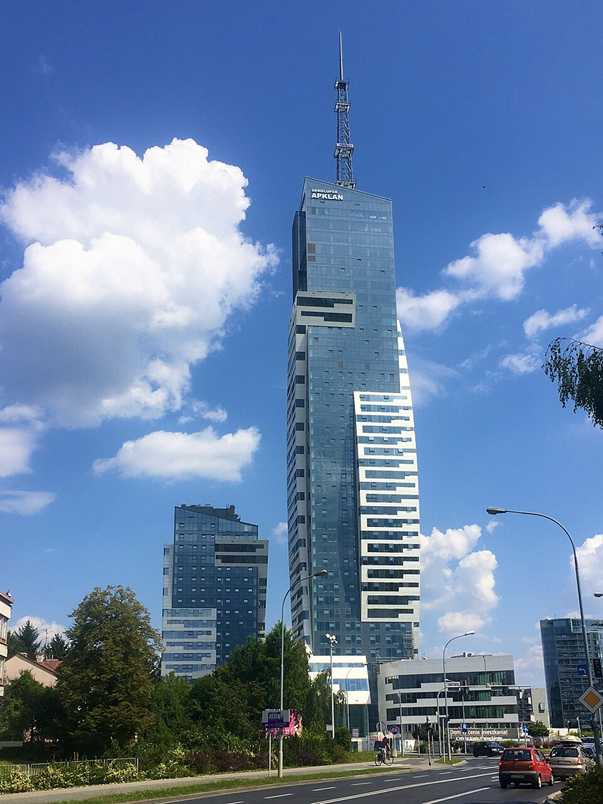
For a visual overview of the city’s modern character, see:
Rzeszów is also known for its strong academic environment and high student-to-resident ratio, making it one of the most student-dense cities in the European Union.
History
Rzeszów received its city rights from King Casimir III the Great in 1354. Its early growth was driven by its location on important medieval trade routes linking the Baltic region with the Middle East. Although it faced wars, invasions, and the Austrian annexation in 1772, the city recovered and gained momentum once again after rejoining Poland in 1918.
In the 1930s, Rzeszów began transforming into an industrial centre as part of the Central Industrial District, particularly in machine and aviation manufacturing. World War II brought severe destruction, but the post-war designation as the capital of a voivodeship in 1945 accelerated development. Today, the well-preserved Old Town, Market Square, Underground Tourist Route, and numerous historic religious buildings reflect the city’s rich past.
Industry
Rzeszów is one of Poland’s most important industrial and technological centres, with strong aerospace, IT, chemical, construction, and service sectors. The city serves as the core of Aviation Valley, the largest aviation cluster in Poland and a leading aerospace hub in Central and Eastern Europe. Aviation Valley brings together over 150 companies, research institutes, and educational partners, creating an ecosystem for aircraft engine production, precision engineering, advanced manufacturing, and aerospace innovation.
Aviation Valley’s flagship company, Pratt & Whitney Rzeszów (formerly WSK “PZL-Rzeszów”), is a major global producer of aircraft engines and engine components. The cluster’s strength is reinforced by close cooperation with Rzeszów University of Technology, one of Poland’s top centres for aerospace education and research. Notably, in 2026, the university celebrates 50 years of pilot training, making it one of the country’s longest-standing academic institutions dedicated to educating civil aviation pilots and aviation engineers.
Beyond aerospace, Rzeszów is home to major companies in the pharmaceutical and chemical industries (Valeant Pharmaceuticals International, Sanofi-Aventis), information technology (Asseco Poland SA — one of Europe’s largest software firms), home appliance manufacturing (Zelmer), and the food sector (Nestlé, formerly Alima-Gerber). Together, these industries shape Rzeszów into a dynamic, export-oriented economic hub with growing international importance.